
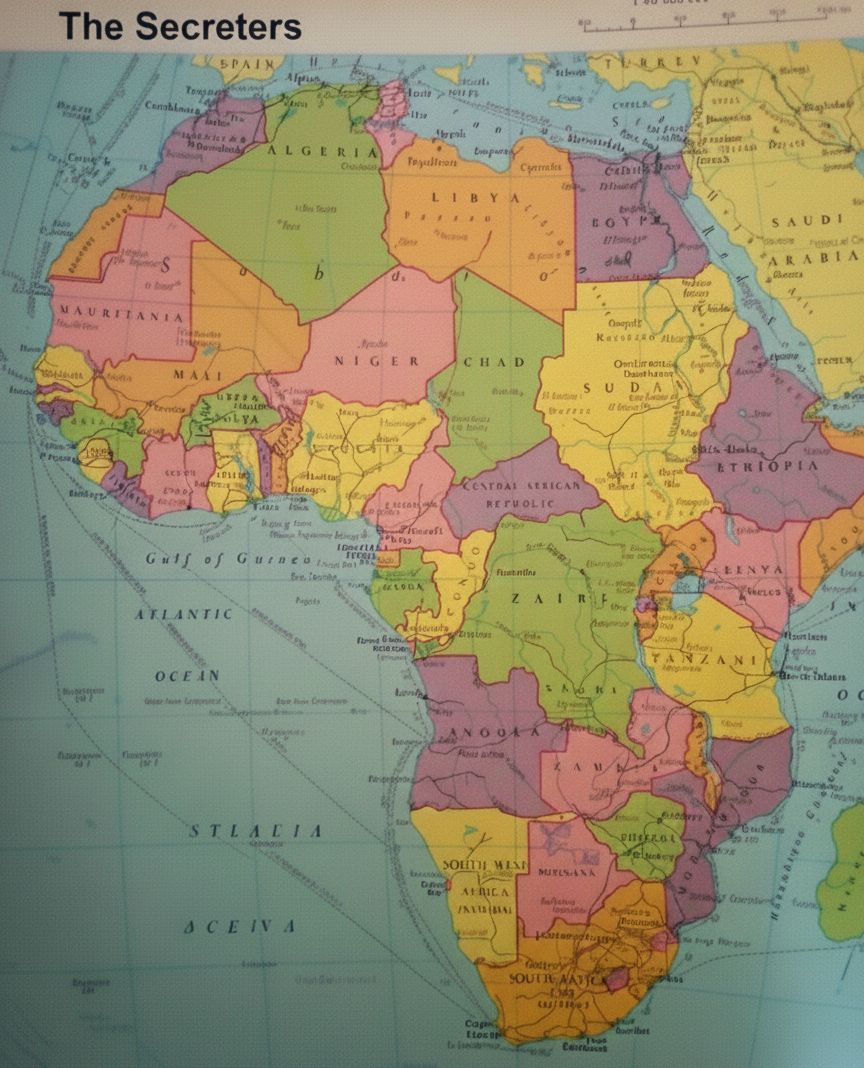
In 2025, Christians face more persecution in Africa. The persecution continues to stem inchmeal from distinct factorial systems which shield the continuous improvement of the persecution over the years. Various organizations, including non-governmental organizations, activists, and groups, have continued to champion the freedom that every individual deserves, irrespective of their religious beliefs, faith, and practices, as well as their tribal affiliations in Africa. Notably, Christian persecution has seen a group of people pulverized and marginalized in some countries in Africa politically, and some Christians have been tortured and killed for their faith. In contrast, some Christians had suffered displacement, This is not a fanfiction from fan-driven tales and contents. Meaning that, this article seeks to expose, inform, educate, and analyze the realities of what Christians are made to pass through in about 10 (Ten) countries which are considered worse for Christians in Africa as of the year 2025.
The sub-Saharan Africa region remains the most violent place in the world for Christians. Major factors leading to this are; the rise of Islamic extremism born out of radical movements, political instability, and internal conflicts. These highlighted problems are key factors, creating a vacuum for militant groups to maintain their leads without restrictions from various countries, particularly, the ten (10) African countries which would be appropriately documented with facts from reliable local and international sources. The issue of Christian persecution across the African continent has not only inflamed global heartaches of big countries, but, has also made them strong with strong terms refuting the overstay of the Christian persecutions, leading to overall insecurities and national disturbances.
What is Christian Persecution? In this context, it is the state in which Christians are made to face critical threats for practicing their faith, exercising their rights in the state, and the lack of full protection for them and their properties. The persecutors go to the length of a distinct prospect to weed out or be committed to the cleansing of this group of people. In sustaining the move; there is violence and physical harm, discrimination and exclusion, attacks on churches and religious properties, forced displacement and abductions, and legal or social barriers inhibiting religious freedom. However, persecution does not only suggest felonious killings, when there is hostility and suppression of believers’ rights and identities solely on their faith. That could be termed persecution.
In the Holy Bible histories, there are recorded persecutions of some sects by another. There are persecutions of the Jewish people by the non-Jewish people and Christians by the non-Christian people. Christians were persecuted by Herod in Acts 12:1-5. Herod’s imprisonment of Peter was illegal and the murder of James further proved this point of persecution to a logical standpoint. This instance of scripture was typical of today’s reality. Persecutions were committed to silencing and cleansing of a particular sect of people by the persecutors to promote and sustain their own generation of perspective thinkers and religious beliefs. Even before Paul later became a Christian. He was committed to this inhuman system. Acts 8:3.
How Persecution Is Measured?
Christian persecution across the African continent can not be analyzed by emotional output, head figures of development, or isolated news gathering. International relevant bodies work with realistic available logistics in ascertaining the persecution records in countries. The ten (10) with these intense records have been studied, assessed, and properly analyzed into facts. The purpose of this is to allow adequate measurements and response from policy makers in the international organizations, agencies, and movements to understand the places risky for Christians and why the places are risky, and what could be done to treat the horrible menace.
The World Watch List (WWL) is an important tool used in referencing the level of persecution across the world. This methodology was developed by Christian advocacy groups. This system evaluates persecution through both pressure and violence, and at the same time, it notices that most places do not necessarily have physical violence as expected. The breakdown of the phases of persecution is given below.
• Restrictions on Daily Christian Life: this captures private life; faith, prayer, or possessing the Holy Bible. Family life; forced religious conformity, family rejections, and other denials in forms. Community life; discrimination and inaccessibility to education, employment and etc. Christians’ public life could be restricted and made impossible due to the ban on them. This sphere is scored to determine how severely Christian identity is suppressed.
• Violence Against Christians: killings, forced marriages, sexual exploitations, abductions, forced closure of Christian churches and schools, forced displacements, and attacks on Christian-populated villages. Countries with frequent, targeted violence against Christians score significantly higher on persecution indexes.
• State as Infliction System: Here, states pass bills that do not accommodate a secular environment that permits Christians to have freedom. Even without mass violence, restrictive legal systems can place a country high on persecution rankings.
• Trend Analysis and Verification: Persecution data is verified using; Field researchers and local networks, Victim testimonies, Media reports, and NGO documentation, Year-to-year comparisons to track escalation or decline. This layered approach ensures accuracy and avoids exaggeration.
10 Worst African Countries For Christians In 2025
. (Listed roughly from greatest danger to lower — based on recent reports)
- Nigeria: Nigeria secures the first point of Christian persecution records for the year, 2025. This stems from major catastrophes that were played out by various terrorist groups in almost all the northern states of the country. From Sokoto State in the Northwest to the Benue State region of the North-central. Nigeria assumed the place of one of the deadliest in Africa and the foremost country with the highest records of persecution. Armed groups including Boko-Haram, ISWAP, Lukurawa, Fulani militias with nameless structures, and other multiple groups have targeted Christian communities. Thousands of deaths, kidnappings, and displacements are much higher in the northern states of the country.
However, terrorist invasion, alleged ethnic cleansing in most reports focused on land issues; farmers-herders are responsible for most crises in Benue, Plateau, and Nasarawa States. The adoption of core Islamic laws, the Sharia, in some northern states and agitation of the same in southwestern regions is an extremism and a threat to the secular nature of the country. It is important to state the killings and displacements of people in the Northern states of Nigeria and the existence of multiple Internal Displaced Persons, (IDPs) categorically.
2. Somalia
With almost no legal protection or civil society safeguards, Christians face extreme threats, often forced to hide their beliefs or risk execution under militant Islamist rule. According to WWL, Somalia is part of the 50 countries where persecutions are committed against Christians. Converts are immediately targeted by families and Al-Shabaab. The state government and community are reportedly aiding the trend.
3. Libya
Ongoing instability and extremist influence mean open Christian practice is dangerous or impossible, with frequent targeted violence. State failure, militias, and the extreme danger to migrant Christians and converts. Libya is one of the leading countries in Africa, ranking in the index of Christian persecution.
4. Sudan
Christian persecution took a shield of years of civil war and shifting political control which have intensified risks, with church properties demolished and believers targeted amidst broader conflict. This persecution focuses on the civil war, displacement (the largest displacement crisis globally), and discrimination against Christians in aid distribution.
5. Eritrea
Tight state control of religion and harsh treatment of unregistered Christian groups make it one of the most repressive environments. The level of Christian persecution in this country assumed the ‘extreme’ status in global ranking due to the dictatorial paranoia and mass imprisonment of Christians in horrific conditions. In fact, the country is labeled the ‘North Korea of Africa’ in juxtaposition.
6. Mali
Jihadist insurgencies in Mali have caused violence against Christian minorities and created hostile conditions in rural areas. The rise of jihads and Islamic radicalists was born from the state’s condition of government instability.
7. Burkina-Faso
Extremist attacks have spread, forcing many Christian communities to flee their homes. The fast-paced increase in violence and displacement in the Sahel contributes to the status of persecution.
8. Algeria
The state has legal restrictions and the closure of many Protestant churches has increased pressure on Christians. Persecution in Algeria is considered severe. Less than 1% of the country’s population publicly identify as Christian live in extreme environments of fear. Minority Rights Group claimed that the majority of the Christian community is subjected to arbitrary arrests and detention, notably based on Algeria’s blasphemy laws.
9. Mauritania
Sharia-based laws and societal pressures make Christian conversion or open practice dangerous. The country’s Islamic Law and absolute secrecy were required for converts.
10. Central African Republic (CAR)
Protracted civil war and targeted violence by armed groups are responsible for Christian persecution here.
Case Studies: Real Incidents From 2025 Showing Christian Persecution Level
- Yelwata Massacre: Nigeria: In mid-June 2025, gunmen attacked the village of Yelwata in Benue State, killing an estimated 100–200 people, many of whom were internally displaced Christians sheltered at a Catholic mission. The assault also forced thousands from their homes and drew international condemnation as recorded by Wikipedia.
- Church Kidnapping in Kogi State: Nigeria (December 3, 2025):
Armed bandits stormed a church service in Ejiba, Kogi State, abducting a pastor, his wife, and several worshippers while congregants fled for safety. Attacks on Christian gatherings like this highlight the risk believers face even during worship. persecution.org has documented.
3. Papiri School Kidnapping: Nigeria (November 21, 2025)
Gunmen abducted over 300 people, mostly students and teachers from St. Mary’s School in Papiri, Niger State. While the kidnappers’ motives are complex, the victims included many Christians, and the attack led to prolonged school closures and community fear. Wikipedia revealed.
4. Kasanga Massacre: Democratic Republic of the Congo (February 12, 2025)
In North Kivu province, militants from the Allied Democratic Forces (ADF), linked to Islamic State affiliates, abducted and executed at least 70 civilians in a Protestant church in Kasanga. This brutal attack underscores the dangers faced by Christian communities in conflict zones. Wikipedia had it.
5. Komanda Massacre: Democratic Republic of the Congo (July 27, 2025)
In another attack in eastern DRC, ADF militants targeted the Saint Anuarite Catholic church and the surrounding area in Komanda, killing around 43 civilians, including men, women, and children, during a night assault. Wikipedia noted.
Why Is Christian Persecution On The Rise In Africa?
• In Sahel countries of Africa: There are government instabilities. Reckless democratic practices and armed military men taking over power. The loopholes created a space for Christian persecution.
• Militant groups are rising, government’s inability to curtail the spread and excesses.
• Competition over lands and resources.
• Ethnocentrism
• The inability of the Islamic constituted authority and government to separate religion from the state. Introduction of Sharia laws, courts, and police is not merely reckless in a state that should be secular but destructive.
Each African country with the records picked from one of the whys above.
The Impacts Of Christian Persecution In Africa/What The International Communities Are Doing About It
The Major Effects
• Displacements continue to flow
• Psychological Trauma
• Destruction levels; Churches, schools, and communities.
• Kidnappings, Killings, ransom cultures.
The Push Of International Communities
• Campaigns against terrorism.
• Humanitarian responses through aid.
• Advocacy by groups; Open Doors, International Christian Concern, and others.
• Policy Measures; Designation of countries with CPC, Country of Particular Concern. These efforts are trying to offer an end to radicalism in Africa.
As readers, you have three things to do to keep this world safe. Support credible human rights and humanitarian organizations, advocate for religious freedom and protections, and share accurate information rather than pushing fake and disturbing news.
Christian communities across Africa are confronting some of the most severe persecutions in the world in 2025. While each country’s situation is unique, the overarching narrative is one of vulnerability, resilience, and the urgent need for protection of basic human rights. Education, advocacy, and international engagement are vital in fostering safer spaces for believers of all faiths.
